Building a lasting relationship takes continuous dedication to your partner and to the relationship itself. Every couple goes through periods of drifting apart, mutual misunderstanding, and conflict. That is exactly why these couples communication tips matter so much. Following them will help you hold onto your love, keep trust strong, and start growing together in harmony again. Whether you have been together for several months or several years, learning how to talk, listen, and genuinely understand one another makes a huge difference in the way you relate.
In this article, you will find practical strategies, easy-to-follow advice, and real steps for more effective communication between couples all in one place.
Why Communication Is the Foundation of Every Strong Relationship
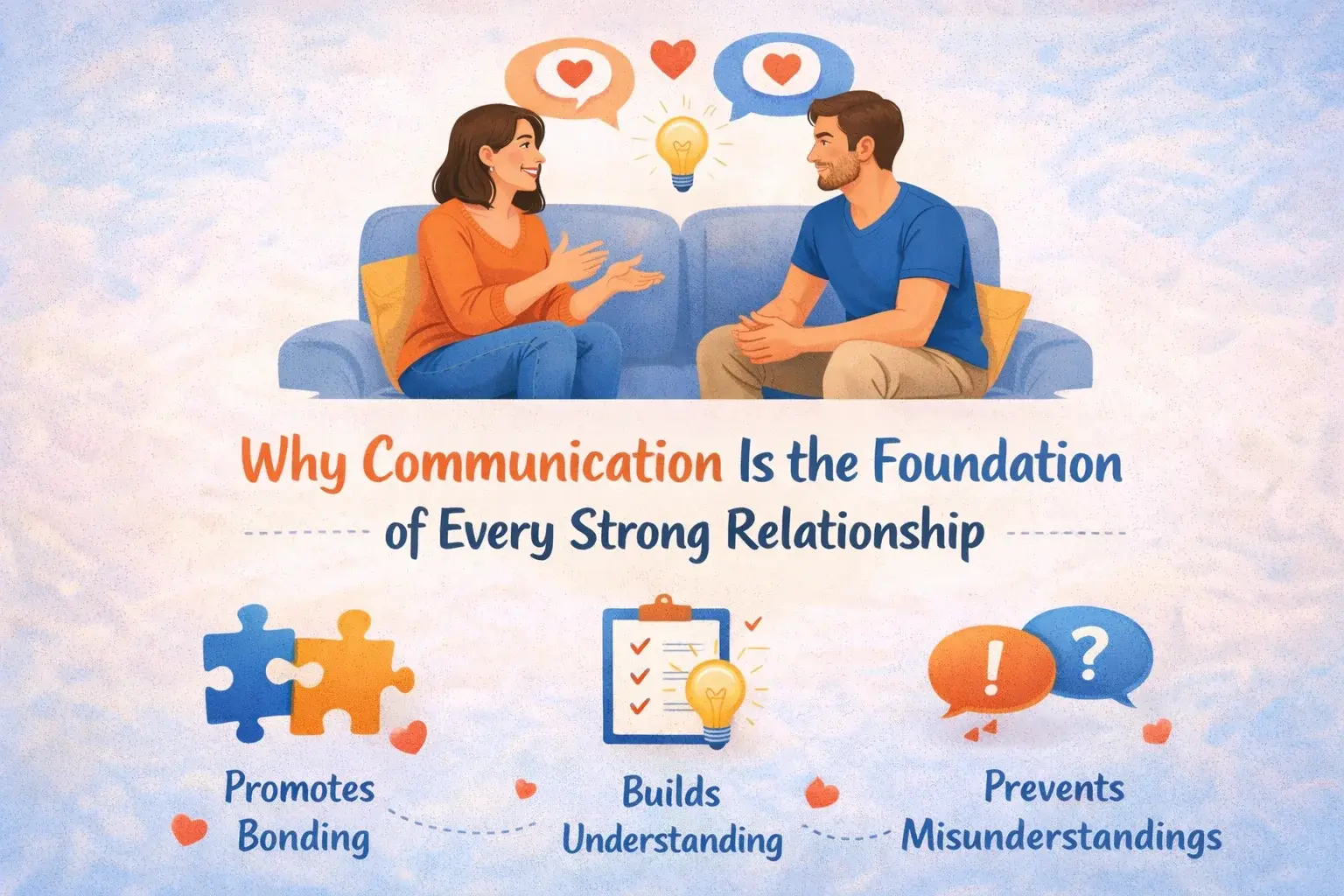
Effective communication is the cornerstone of every healthy relationship. It requires more than just talking it means sharing your genuine emotions, truly listening to your partner, and responding with compassionate understanding. Many couples believe they communicate well, yet still fall short. People tend to speak from personal defensiveness and assume they already know what the other person thinks. These communication failures lead to misunderstandings that cause emotional distress. Over time, emotional distance fuels an ongoing pattern of relationship difficulties.
By contrast, when couples use practical communication strategies such as active listening, clear self-expression, and reassurance they build trust, mutual respect, and intimacy. When both partners feel heard and emotionally safe, conflicts ease and the sense of connection naturally returns.
How to Communicate Better as a Couple: 8 Proven Strategies
1. Listen With Full Attention
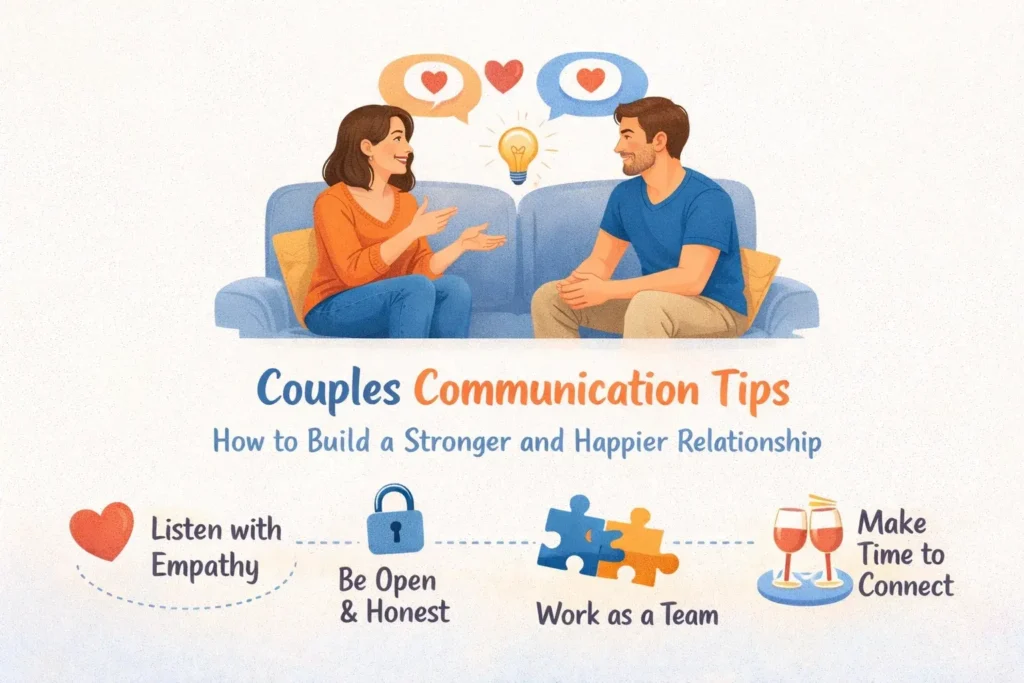
Active listening is the single most important skill in any couple’s communication toolkit. Respectful listening means giving your partner your complete focus while they speak without planning your response until they finish. Put your phone down, maintain gentle eye contact, and avoid interrupting. When they finish, reflect back what you heard: “It sounds like you felt frustrated when I forgot our plans. Is that right?” This simple step shows you care, prevents misunderstandings, and strengthens your emotional bond. Listening is an active skill, and it shapes everything both partners feel and believe about the relationship.
2. Speak From Your Heart, Not From Blame
Blaming your partner triggers defensiveness and breeds tension. Instead of saying “You never listen to me,” try expressing how you feel using “I” statements. For example: “I feel unheard when our conversations get cut short.” This approach keeps the conversation calm and focused on solutions rather than conflict. When both partners share openly without attacking each other, every difficult talk becomes an opportunity to understand one another better. Timing matters too avoid raising important topics when either of you is tired or stressed. Choose a quiet, calm space, and let your words encourage connection rather than conflict.
3. Handle Conflict With Respect
Conflict is a normal part of every relationship. What matters most is how you manage it. Focus on solving the current issue rather than revisiting your partner’s past mistakes. If you feel emotionally overwhelmed during a disagreement, take a short break before continuing. Stepping away prevents you from saying something harmful and gives both of you space to reset and re-engage constructively.
4. Validate Feelings and Create Emotional Safety
Emotional validation is a powerful couplescommunication technique. Phrases like “I understand why you feel that way” or “Your feelings make complete sense to me” demonstrate empathy and genuine care. When partners create emotional safety for each other, communication improves naturally and the relationship bond deepens. Small actions a nod, a soft tone, brief words of encouragement all reinforce an atmosphere of respect and intimacy.
5. Pay Attention to Non-Verbal Cues
Words are only one part of communication. Your facial expressions, body posture, and gestures send powerful messages to your partner. Eye-rolling, sarcastic remarks, and crossed arms can cause unintentional damage even when your words seem neutral. Conversely, gentle eye contact, a relaxed posture, and a calm voice build trust and comfort. Even small smiles, light touch, and attentive nods during a conversation deepen your emotional bond. Healthy couples communication depends on both verbal and nonverbal signals. Couples who pay close attention to non-verbal cues experience fewer misunderstandings and enjoy more affectionate daily interactions.
6. Show Appreciation Every Day
Communication is not only about solving problems it is also about expressing gratitude. Saying thank you, offering sincere compliments, and acknowledging your partner’s small contributions all strengthen your bond. Positive words create warmth, reduce tension, and make both partners feel genuinely valued. When appreciation becomes a daily habit, it reinforces the relationship and makes conflicts easier to navigate. The most effective couples communication starts with simple, consistent acknowledgment and that is how love continues to grow.
7. Schedule Regular Check-Ins
Daily obligations and work commitments make deep connection difficult to maintain. That is why weekly check-ins are so valuable. Set aside dedicated time to share how you are feeling, celebrate wins, discuss challenges, and identify areas for growth together. Regular check-ins allow couples to resolve small misunderstandings before they grow into larger problems. This consistent practice builds stability, trust, and a deeper sense of understanding in the relationship.
8. Try Simple Daily Communication Exercises
Even five minutes of focused daily conversation can significantly improve your relationship. One partner speaks while the other listens without interruption. Then you switch. This basic exercise builds listening skills, emotional awareness, and empathy. Practiced consistently, it makes open and honest communication feel effortless and natural over time.
Seek Professional Help When You Need It
Every committed relationship faces tests throughout its journey. If communication has broken down significantly, couples counseling or marriage therapy can be a valuable step forward. A trained therapist helps you identify the behavioral patterns driving conflict, teaches effective conflict-resolution tools, and gives you skills to strengthen your relationship. Choosing therapy is a sign of commitment it shows that you value your partner and your relationship enough to invest in it. Seeking help early can prevent future issues while building greater trust, emotional intimacy, and understanding.
Conclusion
Strong relationships require consistent effort, patience, and a genuine commitment to growth. These couples communication tips from active listening and respectful dialogue to emotional validation and conflict resolution are practical skills you can start using today. When you make meaningful communication a daily priority, your bond deepens, conflicts become easier to manage, and the love between you continues to grow. Start practicing these strategies now and experience the difference they make in your relationship.
Frequently Asked Questions About Couples Communication
Q1: What is the most important couples communication tip?
The most important tip is to practice active listening. This means giving your partner your full attention, understanding their emotions, and reflecting back what you heard. This approach prevents misunderstandings and builds a much stronger emotional connection between partners.
Q2: How often should couples have meaningful conversations?
Brief daily conversations are highly beneficial. Weekly check-ins are also effective for evaluating progress together. Use this time to share feelings, discuss challenges, and celebrate positive moments. Regular dialogue prevents small issues from developing into serious conflicts.
Q3: How can I stop arguments from escalating?
Focus on solving the problem rather than judging the person. Use “I” statements, avoid bringing up old disputes, and take a short break when emotions run high. Expressing your feelings calmly while listening carefully reduces stress and makes problem-solving much easier.
Q4: Do non-verbal signals really matter in couples communication?
Absolutely. Facial expressions, gestures, and body language often communicate more than words alone. Eye contact, relaxed posture, and a calm tone build trust. Sarcasm, sighing, and crossed arms create distance and can quickly break down communication between partners.
Q5: When should couples consider professional help?
If repeated arguments, blocked communication, or increasing emotional distance become a consistent pattern, seeking help from a counselor or therapist is a wise decision. Therapy demonstrates dedication to the relationship and provides couples with tools to restore trust, improve communication, and rebuild emotional intimacy.