What Is Post Infidelity Stress Disorder? Post Infidelity Stress Disorder (PISD) describes the severe emotional and psychological distress that can occur after an individual discovers their partner has been unfaithful. It is characterized by symptoms that resemble those of trauma-related conditions, anxiety disorders, and prolonged stress responses. Although the experience can be deeply overwhelming and disruptive to daily functioning, PISD is not currently recognized as a formal mental health diagnosis.
People who experience betrayal develop deep shock, permanent fear, invasive thoughts, and challenges to trust others in relationships. People who experience these reactions after a betrayal experience more than basic sadness and pain. The effects of these conditions persistently impact all aspects of daily existence through their influence on social connections, personal value, and emotional stability.
The emotional consequences of infidelity create more serious emotional damage than regular relationship problems. The recognition of this response as a stress disorder enables understanding of the intense emotions that persist without relief.
How Does Infidelity Cause Stress?
Infidelity breaks trust, a core bond that supports emotional security in intimate relationships. The partner who experiences betrayal suffers from distressing emotions that resemble the symptoms of traumatic stress when the trust between partners breaks down. The betrayal creates constant intrusive thoughts that interrupt their ability to sleep, work, and maintain their mental calmness.
People experience really strong negative emotions, which include sadness and confusion, shock and disbelief,f right after they find out about something. The intensity of these emotions leads to mental loops,s which make people experience the moment of betrayal for continuous repetitions.
The relationship effects in these cases extend beyond their defined boundaries. People experience difficulties when they attempt to trust their friends and family members and themselves. The future relationships they establish will result in their upcoming partners betraying their trust.
This is where couple communication becomes central. The partners need to share their emotional experience of betrayal and their individual needs in order to create a path toward their healing process and restoration of relationship trust.
Common Symptoms of PISD
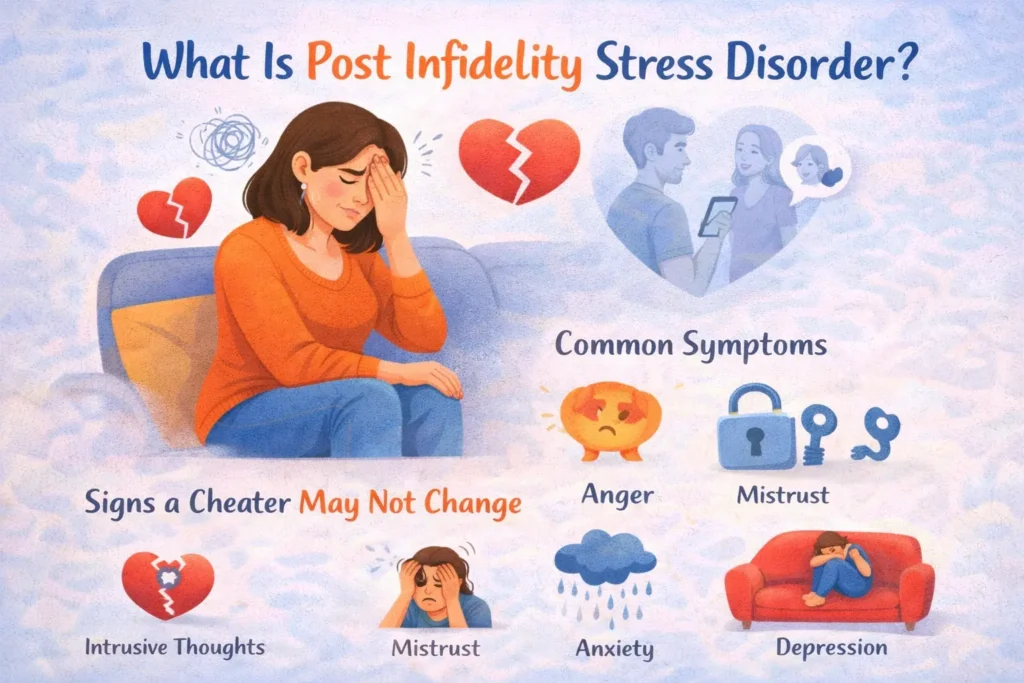
People with Post Infidelity Stress Disorder show symptoms that affect the emotional, cognitive, and physical aspects of their lives. The symptoms of this condition demonstrate commonality with the stress responses that people exhibit when they experience other types of traumatic events.
People experience both intrusive thoughts and flashback episodes as common symptoms. The mind will continue to replay betrayal incidents, which prevent a person from achieving their focus and peace of mind.
The loss of trust stands as the main problem. The cheating partner breaks trust, which causes two negative effects. People who face trust violations will lose their ability to trust others,s while they also lose their ability to trust themselves.
Some people begin to numb themselves to avoid feeling pain emotionally. Some people experience anxious, restless, and edgy feelings throughout most of their day. People frequently experience physical issues which include tiredness and headache,s and sleep disturbances.
The couple needs to establish open communication, which will serve as their lifesaving solution during these situations. Partners can reach their healing solution through the direct expression of emotional pain which they experience from betrayal,l without using any judgment or refusal of their current emotional state.
Emotional Responses After Betrayal
People experience grief after discovering infidelity because it feels like they lost someone important to them. The relationship they believed in suddenly becomes unknown. Grief consists of multiple emotional states, which include sadness and anger, confusion and disbelief.
Anxiety is another common emotional reaction. Partners who experience betrayal will develop three different emotional responses, which include fearing future betrayals, worrying about their future, and feeling unsafe in places they know. The state of enhanced awareness creates a feeling of exhaustion that people find impossible to control.
Self-blame and questioning self-worth are also common. People who experience this situation want to know why they failed to recognize warning signs that present themselves earlier in the process. The thoughts create deeper emotional pain, which prevents the person from healing.
Healthy couple communication in these moments goes beyond simple conversation. The process requires active listening and empathy combined with the need for patience. The process of emotional healing begins when one partner feels their thoughts and emotions are completely understood without any judgment.
What Is Post Infidelity Stress Disorder? AND How Infidelity Affects Mental Health
The emotional impact of infidelity extends into mental health. After betrayal, some people develop anxiety disorders, which include generalized anxiety and panic symptoms that arise from reminders of the betrayal.
Depression exists as another widespread mental health condition. The combination of ongoing sadness, diminished interest in all activities, and reduced energy levels creates a situation that makes life impossible to handle. The deep emotional wound that results from betrayal creates the emotional responses that people display afterwards.
Some symptoms appear to mirror post-traumatic stress responses through their display of flashbacks and emotional detachment and their state of heightened alertness. The reactions demonstrate that both mind and body react to emotional injuries with the same response used to protect against actual physical threats.
The way couples interact with each other through their communication shows their partner how they will behave throughout their relationship. When partners engage in open discussions about their emotional boundaries and personal fears and their actual feelings, this practice brings about better emotional understanding between them.
Healing from Post Infidelity Stress Disorder
People need time, along with their emotional needs and their social connections, to recover from Post-Infidelity Stress Disorder. The process requires partners to engage in self-reflection while they learn to manage their emotions and restore their relationship with themselves and each other.
Therapy and counseling are frequently recommended to clients. A professional delivers three essential services through the provision of coping tools and emotional processing strategies,s and safe spaces to discuss overwhelming trauma responses.
The situation improves when people establish healthy boundaries. The process of establishing boundaries through structured rules and defined limits leads to reduced uncertainty which protects people from further emotional damage during their healing process.
Self-care activities,s together with mindfulness practices, create a foundation for people to achieve emotional stability. The activities of journaling and mindful breathing,g and spending time with people who are trusted, create a process for controlling stress while building internal strength.
Above all, open communication about feelings, fears, and needs establishes trust between the partners at each step of their relationship. The partners can achieve healing through their commitment to practice honest dialogue, which does not involve blaming each other.
The Role of the Unfaithful Partner
When a couple decides to continue their relationship, the unfaithful partner must recognize their wrongdoing because it formed a barrier between them and their partner. The process of recovery from an addiction becomes delayed because a person uses denial or defensive behavior, or they downplay their problem.
The process of taking responsibility requires people to explain what occurred while they answer all questions with complete honesty, and they show their truthfulness through their behavioral patterns. The process of healing requires complete openness about all matters.
Trust restoration demands dedicated work from both involved partners. The unfaithful partner must demonstrate dependability through two specific attributes, while the betrayed partner needs to establish secure boundaries for expressing their emotional distress. Strong and respectful communication between couples needs to be present in this situation again.
Conclusion
Post Infidelity Stress Disorder describes the deep emotional impact that betrayal can have on a person and a relationship. The symptoms of the condition display similarities to trauma and extended stress reactions because it includes intrusive thoughts, anxiety, grief, and hypervigilance.
Recovery requires three essential elements, which include time and self-reflection, social support,t and genuine dialogue. The partners require therapy and self-care and boundary setting, and most essential need to practice respectful,l structured communication to support their healing process.
Many couples develop a stronger relationship through the process of recovery after they learn to communicate openly and listen with empathy, and rebuild their relationship safety from its most basic level.
FAQs
1. Is PISD a formal diagnosis?
No. Post Infidelity Stress Disorder exists as an unofficial medical condition that practitioners acknowledge because its emotional symptoms and trauma-related symptoms can be observed in patients.
2. How long does PISD last?
The length of time needed for recovery differs among individuals because some people will heal after a few months, while others require multiple years to recover,r especially when their symptoms are severe. The process of recovery becomes faster when people receive support and undergo treatment.
3. Can relationships heal after betrayal?
Yes, we can reach our goal through consistent effort, by proving commitment through actions, showing genuine understanding, accepting responsibility, and strengthening healthy communication between partners.
4. Should both partners go to therapy?
Therapy helps to nurture people, while goodwill and honest communication are essential in couples therapy.
5. What role does couple communication play?
The process of rebuilding trust starts with people expressing their needs because they need to establish their personal boundaries, which enables them to feel emotionally secure during their healing process.