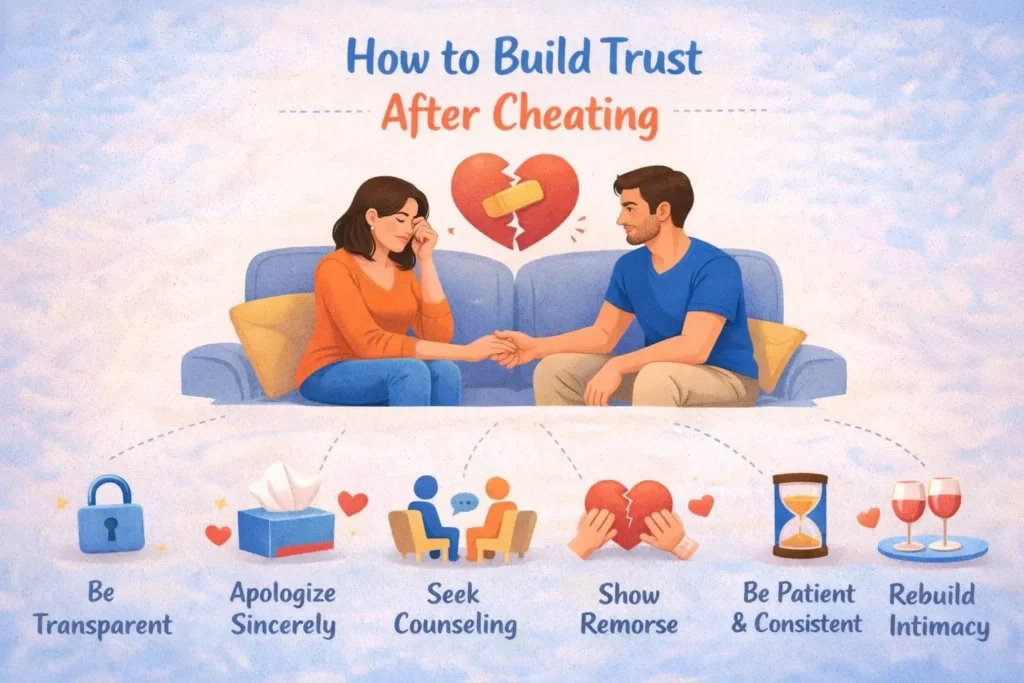
How to build trust after cheating is something many couples find themselves desperately searching for when infidelity tears through the core stability of their relationship. The emotions that follow aren’t simple — both partners often find themselves cycling through anger, guilt, confusion, shame, fear, and a sadness that’s honestly hard to put into words. Healing doesn’t happen overnight, and that’s okay. Trust, once broken, needs real time and genuine patience to find its way back. What matters most is that both people are willing to show up, have the hard conversations, and put in the work together.
Trust between partners who experienced cheating can be rebuilt. The process needs partners to take responsibility for their actions while expressing their feelings through structured couple dialogues. The article presents practical methods that help partners restore trust while building a more positive future together.
Understanding the Impact of Infidelity
Cheating involves more than its physical expression. It breaks emotional safety. The betrayed partner experiences feelings of being replaced and rejected while struggling with deep insecurity. The cheating partner experiences guilt and relationship fear and shows defensiveness. The unaddressed emotions create relationship distance, which leads to conflict.
It is important to understand that healing timelines differ. Some individuals begin to stabilize within months. Others take years. There is no universal deadline. The goal is progress, not perfection.
Taking Full Responsibility
You need to establish your credibility through responsible behavior because this is the foundation of your trustworthiness. The partner who cheated needs to accept complete responsibility for their actions without any form of reduction, blame passing, or focus shifting. The statements “It just happened” and “You weren’t giving me attention” create obstacles that prevent progress.
- Responsible parties must show wrongdoing through their admissions. The responsible party must break all contact with the third party. The responsible party must respond to all reasonable inquiries with truthful answers. The responsible party must demonstrate empathy for the pain they have caused to others.
Couples in this stage need to practice communication through listening, which should be done without interruptions. The cheating partner needs to let their spouse express both anger and sadness, which should not be interrupted with attempts to achieve forgiveness.You need to prove your dedication by completing three months of consistent work in order to achieve your goal. The year 2023 serves as your final date to complete your training.
Allowing Emotional Expression
The emotional impact of cheating remains strong until the situation ends. The betrayed partner demonstrates unexpected crying episodes, together with repetitive questioning and unpredictable emotional changes. This is normal. Traumatic experiences lead people to experience persistent intrusive thoughts and develop feelings of insecurity.
Healthy couple communication includes:
- The two elements of healthy communication show through their scheduled time period for discussing feelings, which the couple needs to establish. The couple needs to maintain calmness when they talk because their disagreement requires them to express their different opinions. The couple establishes complete boundary restrictions that determine their acceptable ways to use respectful language. The couple uses active listening skills to understand each other better.
The partner who committed infidelity faces emotional difficulties. The two emotions of guilt and shame create strong emotional experiences. The two partners require separate areas to share their personal feelings.Counseling provides a framework that supports the progress of these discussions. The therapist delivers to couples the skills that help them control their emotional distress while they work on bettering their communication with each other.
How to Build Trust After Cheating AND Ending the Affair Completely
Trust cannot grow while the affair continues in any form. Emotional or physical contact must stop entirely. This includes social media communication, secret calls, and hidden messages.The partner who cheated should make a clear, final statement ending the relationship with the third person. In some cases, the betrayed partner may need to witness or read this message for reassurance.Partial endings create ongoing anxiety. Complete closure creates stability.This step requires strong couple communication. Both partners must discuss expectations clearly. Ambiguity creates setbacks.
Understanding Why It Happened
The study of cheating requires an exploration of its underlying causes because this work needs to be done, although it creates discomfort. The purpose of this study does not aim to justify the observed conduct. The focus of this research is on human behavior through the study of established patterns.
Common contributing factors include:
- Emotional distance
- Unresolved resentment
- Personal insecurity
- Poor boundaries
- Opportunity without accountability
In some cases, the cheating partner avoided addressing dissatisfaction. In others, individual struggles played a large role.Open communication helps uncover deeper issues. Understanding should be the main goal of conversations, while people should avoid attacking each other. Learning becomes impossible when people engage in blame. The act of being curious leads to personal development.You need to keep your personal and relationship responsibilities separate from your present responsibilities. The choice to cheat is made by the person who cheated. The relationship challenges, however, might need joint effort instead.
Rebuilding Emotional Intimacy
Trust depends on emotional intimacy between people. After betrayal, people feel unsafe with their former connections. The partner who was betrayed will stop showing affection. The partner who cheated will experience anxiety about being rejected.
Rebuilding intimacy begins with small daily efforts:
- Expressing appreciation
- Sharing thoughts and feelings
- Spending intentional time together
- Showing affection in non-sexual ways
The couple communication exercises provide assistance to partners who need help establishing their connection. The couple relationship needs daily check-ins and weekly reflection sessions because these activities build emotional bonds between partners.
People require physical closeness to their partners when they achieve their own personal comfort level. The healing process requires normal healing rates because excessive pressuredisrupts its progress. A relationship reaches security when both partners achieve complete readiness for their commitment. The two partners of a relationship develop emotional intimacy through their ability to listen to each other and make each other feel important.
Creating New Relationship Agreements
After cheating, many couples realize their old patterns were not sustainable. This creates an opportunity to design healthier relationship agreements.
New agreements may include:
- Clear boundaries with friends or coworkers
- Expectations around social media use
- Regular relationship check-ins
- Commitment to honesty about attractions
Structured couple communication helps define these agreements. Both partners should contribute equally. Rules imposed by one side rarely succeed.Written agreements sometimes provide clarity. Revisiting them monthly ensures alignment.These agreements are not about control. They are about safety and mutual respect.
Managing Triggers and Setbacks
The process of healing does not progress through a straight path. Specific dates and locations, and particular events trigger my recollection of painful past experiences. The combination of receiving late text messages and losing previously scheduled plans with someone causes my anxiety to rise.
People who experience strong emotional reactions when they encounter reminders from their past demonstrate their ongoing struggle with their present situation. The unfaithful partner must show both understanding and compassion whenever their partner experiences those emotional moments. The statement “You should be over this by now” creates additional emotional suffering because it reopens existing emotional wounds.
Healthy couple communication during setbacks includes:
- Acknowledging the trigger
- Offering reassurance
- Avoiding defensive reactions
- Revisiting coping strategies
Triggers reduce over time with consistent safety. Patience is essential.
Seeking Professional Support
Therapy offers people systematic support, which helps them through their emotional difficulties. A certified therapist assists couples in resolving their conflicts while they work to restore their emotional connection.
Couples therapy focuses on:
- Couples therapy proceeds through these main treatment areas. The therapy helps partners to enhance their communication abilities. The therapy assists partners in their journey to discover their underlying relationship difficulties. The therapy helps partners to work through their emotional traumas. The therapy helps partners develop methods to take responsibility for their actions.
Through individual therapy sessions, people can receive assistance. The partner who experienced betrayal requires support to recover from their traumatic experience. The partner who committed infidelity needs to investigate their personal behavior patterns and their problems with impulse control.
Professional support will help minimize the risk of unresolved prior confrontations.
Rebuilding Self-Confidence
Infidelity damages a person’s self-esteem through its destruction of trust between partners. The betrayed partner doubts their physical attractiveness and their personal value. The partner who cheated may struggle with self-respect.
Rebuilding trust requires people to restore their individual confidence. Self-growth activities help people achieve emotional stability. People achieve life balance through their exercise routines and their hobbies, their friendships, and their personal objectives.
To achieve a healthier and more cooperative relationship, one has to communicate between the two individuals, positively activating one another.
Forgiveness: A Process, Not a Moment
People have difficulty understanding the true meaning of forgiveness. The act of forgiveness does not require complete amnesia of past events. The act of forgiveness requires acknowledgment of the existence of betrayal, which must be dealt with. The process of forgiveness involves a person releasing their permanent feelings of anger toward another person.
The process of forgiveness requires people to feel safe before they can forgive others.
Couple communication about forgiveness should focus on readiness because it needs to take place in the relationship. Some individuals forgive internally before trust fully returns. The first group needs time to recover their trust, while the second group needs more time.
The objective of this mission does not aim to eliminate historical events. The objective of this mission is to establish a fresh beginning through which we will not face ongoing punishment.
Building a New Relationship Identity
Some couples describe post-infidelity recovery as creating a new relationship. The previous relationship pattern has been replaced by a new relationship pattern. The new relationship pattern brings different elements that replace the existing elements.
This new relationship often includes:
- Stronger emotional awareness
- More honest couple communication
- Clearer boundaries
- Increased empathy
Painful experiences show their potential to bring about personal development when people manage them with proper care. The relationship that emerges will become more purposeful according to the way people involved in it choose to interact.
Transformation is the true fruit of pain.
Patience and Realistic Expectations
The process of healing from infidelity requires extensive effort. The healing process advances at a slower pace than expected. People experience sudden moments of doubt that they cannot control.
The establishment of practical expectations helps to keep people from becoming discouraged. Trust usually develops through multiple stages during the rebuilding process.
- Crisis stabilization
- Emotional processing
- Behavior change
- Gradual closeness
- Renewed commitment
Couple communication should evolve during each stage. Early conversations focus on facts and emotions. The subsequent discussions examine their planned objectives for the future. Patience protects progress.
Strengthening Long-Term Relationship Habits
Once stability is enhanced, sustaining good habits is crucial.
Long-term habits include:
- Weekly couple communication check-ins
- Honest discussions about stress
- Immediate resolution of minor conflicts
- Ongoing emotional appreciation
- Continued transparency
The mentioned habits create obstacles that block progress towards future objectives. The process of protecting something proves simpler than its subsequent restoration. Strong relationships require ongoing effort to achieve their desired state. The development of resilience depends on maintaining a steady schedule of activities.
Conclusion
Rebuilding trust after cheating constitutes one of the most difficult challenges that couples experience in their relationship. People respond to this situation through three emotional states, which include pain and anger, and doubt. The process of healing needs people to practice four essential elements, which include taking responsibility, sharing their feelings, being open about everything, and maintaining a continuous practice through multiple days.
The process of recovery depends on how couples communicate with each other. The absence of open dialogue leads to an increase in misunderstandings between people. Through organized conversations, which people conduct with respect to each other, both parties achieve a better understanding while their emotional security gradually improves.
The process of trust restoration requires multiple time periods. Trust restoration requires ongoing actions that match verbal commitments. The process requires maintenance through three elements, which are patience, empathy, and professional guidance. Some relationships do not survive infidelity. Other relationships become stronger through their commitment to each other.
Outcome rests on a shared willingness to face discomfort, to be completely truthful and genuine, and to commit to meaningful change by both parties.
FAQs
1. Can trust truly be rebuilt after cheating?
Yes Trust can be rebuilt through a process that needs both parties to take full responsibility and show everything they know and to maintain open communication throughout their relationship.
2. How long does it take to rebuild trust?
The couple’s progress might vary from several months to several years. The couple’s progress depends on their ability to create a safe emotional environment together, the trust they share, and their ability to act predictably.
3. Should we tell family or friends about the affair?
The decision requires evaluation of two factors, which are comfort level and support requirements. The process of sharing information with trusted people needs to be done. The act of sharing too much information creates stress for others. Couples need to establish their personal limits through mutual discussion.
4. Is therapy necessary after cheating?
Professional guidance proves to be beneficial for many couples. Therapy is not a requirement for people, but it provides them with valuable advantages. The counselor helps couples to better understand each other while he delivers them specific methods for repairing their emotional connection. seek it.
5. What if the betrayed partner keeps bringing up the affair?
The process of trauma healing requires more than a single treatment session because people need multiple sessions to fully recover. The process of healing requires people to respond with balanced emotional and physical responses. The process of healing requires people to respond with balanced emotional and physical responses. The discussion between parties declines when their security level increases over time.