People experience deep emotional pain from infidelity. The act of betrayal destroys trust between partners while it creates emotional distress, which forces one partner to doubt their understanding of love. Many people use the phrase “once a cheater, always a cheater” during their most difficult times. The statement sounds firm and absolute. The statement provides a sense of security to the speaker. The person who commits infidelity will repeat the act. The belief helps people establish order during times of disorder. People develop complex relationships with one another.
Emotions and environmental factors, together with personal development and maturity, create the conditions that shape human behavior. People who commit cheating do not all exhibit the same behavior pattern throughout their entire lives. People who make the same mistake need to learn from their error, while others succeed to learn from their experience.
Why People Believe “Once a Cheater Always a Cheater”
The phrase exists because patterns in reality exist. The person who lies about their relationship status commits multiple acts of deception. The person uses deception to create false narratives while escaping their duties. The statement becomes true in such situations. Research and personal stories show that repeated betrayal often connects to deeper character traits. People who show these traits tend to lack empathy and demonstrate unpredictable behavior while displaying their need for approval.
Many people use this belief to protect their emotions. After someone experiences betrayal, their pain becomes too intense to bear. The mind looks for simple rules that will protect it from future danger. The statement “once a cheater,r always a cheater” creates a boundary that people have to follow. The statement tells people to protect their hearts from any future romantic relationships. The rule does not apply to all situations.
A person can achieve personal growth through complete comprehension of their harmful actions and their dedication to transformation. The process of transformation depends on couples maintaining regular communication while demonstrating their commitment through observable behaviors.
The Psychology Behind Cheating
Cheating exists as a complex behavior that manifests through multiple methods. Cheating occurs because individuals are driven by different reasons for their cheating behavior. Some individuals cheat because their desire for adventure drives them to break rules. People engage in cheating behavior because they suffer from three emotional states, which include loneliness and resentment, and emotional neglect. Partners in some relationships reach a point where they no longer share their emotions.
The situation develops into a greater conflict. The parties involved in the situation start to create more space between themselves. One partner in the relationship chooses to find comfort in another person instead of solving their problems through direct communication. The choice remains incorrect. The identification of reasons helps to assess the potential forthe achievement of a successful transformation.
Patterns vs. One-Time Mistakes
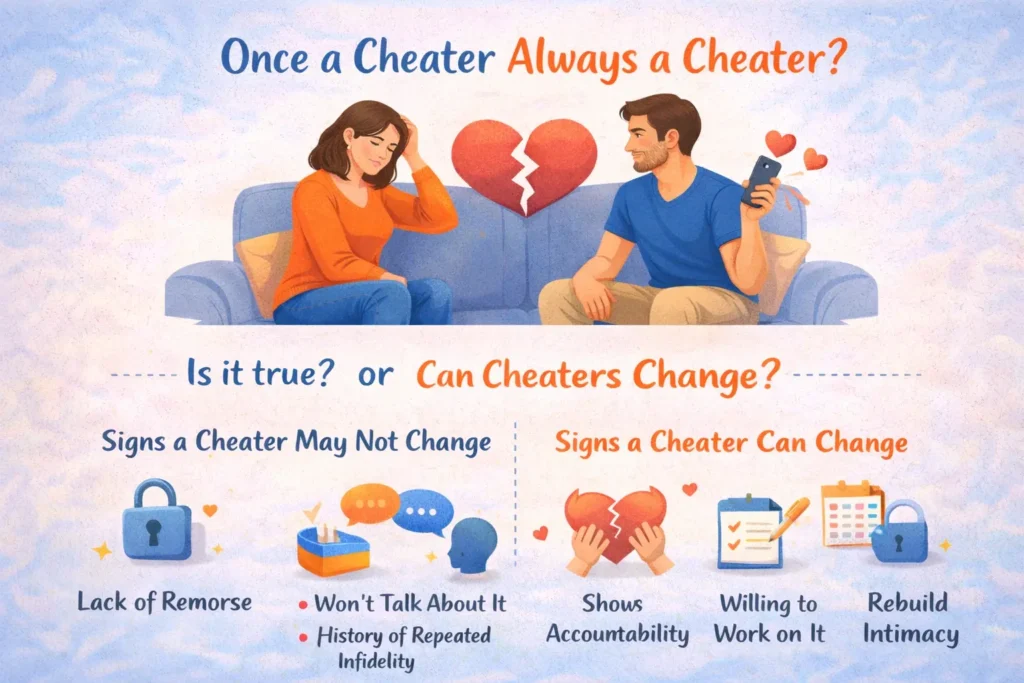
The difference between repeated cheating and a single incident of cheating that causes remorse shows two distinct cheating patterns. The pattern consists of three elements, which include lies and denial, and blame shifting. The person shows little empathy. The person downplays the severity of the betrayal. Trust rarely returns in these situations because the person maintains their same conduct.
The first instance of betrayal, which brought deep remorse, shows different results. The person accepts responsibility without excuses. The person who experienced pain answers their questions without holding back. The people involved ended all ties with the outside person. The people involved reached an agreement to maintain open visibility. The people involved work together to develop their communication skills as a couple. Real transformation requires people to experience uncomfortable situations.
The process requires people to listen to angry feelings without showing defensive reactions. The process requires people to build protective systems through gradual steps. Permanent change happens through time, but actual transformation requires people to show consistent behavior. People who show accountability and a desire to develop themselves represent the essential distinction between the two groups.
Can People Truly Change?
People have the ability to develop themselves. The majority of people reach maturity through their painful life experiences. The process of learning becomes effective when people experience deep regret. The experience of cheating leads people to reconsider their core values, their main life goals, and their emotional response patterns. The combination of therapy, personal reflection, and spiritual development leads to new behavioral patterns. People need to put in work to achieve their goals.
Trust Rebuilds itself through a gradual process. The partner who has been betrayed develops three main symptoms, which include anxiety, intrusive thoughts, and a persistent fear that the same situation will happen again. The situation requires the development of patience. The partner who engaged in infidelity needs to learn that the process of gaining forgiveness requires an extended period. Daily dedication stands as the fundamental requirement for the rebuilding process. The couple needs to establish transparent communication channels, which must replace their current practice of keeping secrets.
The discussion will create a feeling of discomfort for the participants. The body will experience two emotional states, which people will express through tears and anger. The healing process includes these specific moments. Equal commitment from both partners leads to relationship strength because the two partners established trust through their common investment. The relationship begins to become suspicious when people stop making efforts. The result will depend on the level of consistency maintained.
The Role of Couple Communication in Rebuilding Trust
The area of broken trust experiences deterioration through silent treatment. The act of avoiding discussions leads to relational separation between individuals. The partner who experienced betrayal tends to visualize their most terrifying worst-case situations. Couples who engage in open communication can express their deepest anxieties.
The cheating partner must disclose all information when answering inquiries. The initial stage of their relationship requires both partners to share details about their daily activities, telephone usage, and social life. The situation does not involve attempts at controlling others. The process centers on creating a secure environment for people to work.
Effective communication between couples requires them to resolve hidden issues. Partners discuss their unmet requirements and emotional detachment, and the way they handle conflicts. The couple learns new methods that help them handle their discontent. The skills that they acquire will help them decrease their chances of experiencing future betrayals.
When the Phrase Becomes True
A person who needs constant recognition will follow the same behavior pattern until their need for validation disappears. The cheating partner will block any possibility of change if they refuse to attend therapy and will not participate in couple communication.
The warning signs appear because people carry out secret activities while they defend their position, and they accuse their partner who suffered betrayal,l and they downplay the serious nature of the betrayal. The absence of accountability causes historical events to repeat themselves. The injured partner needs to assess the actual deeds of their partner instead of believing in the partner’s commitments.
Trust restoration requires more than spoken words. The pattern of lying continues, which presents a constant threat. In such situations, people need to terminate their relationship for the sake of their emotional well-being. The path to health begins with separation at times because betrayal breaks some relationships beyond repair.
Emotional Impact on the Betrayed Partner
The warning signs appear because people carry out secret activities while they defend their position, and they accuse their partner who suffered betrayal,l and they downplay the serious nature of the betrayal. The absence of accountability causes historical events to repeat themselves. The injured partner needs to assess the actual deeds of their partner instead of believing in the partner’s commitments.
Trust restoration requires more than spoken words. The pattern of lying continues,s which presents a constant threat. In such situations, people need to terminate their relationship for the sake of their emotional well-being. The path to health begins with separation at times because betrayal breaks some relationships beyond repair.
The partners who have been betrayed use couple communication to share their fear with no need for shameful expression. The process of bottling emotions will lead to the development of resentment. The act of honest communication creates a connection between people who feel apart. The process of recovery requires an extended duration. The process of forgiveness requires time for complete execution.
The way people experience their pain differs from one person to another. Some people want to restore their relationship. Some people think they will never recover from the act of betrayal. Both choices are valid. The process of emotional growth requires people to put their emotional well-being above everything else.
Social Media and Modern Temptations
Contemporary relationships encounter different obstacles. Social media makes it simple to reconnect with former partners. People use private messaging to create secret communication channels. Casual conversations serve as the starting point for emotional affairs. The passage of time causes people to lose track of their established limits. Most couples fail to recognize the dangers that exist between them.
The establishment of specific boundaries functions as essential protection for relationships. The practice of openly discussing expectations helps people avoid misunderstanding each other. Couples need to discuss their online activities as part of their relationship communication.
What counts as inappropriate? What feels disrespectful? Partners establish trust in their relationship by creating boundaries that both partners agree to. The situation becomes unclear when people refuse to talk about these matters. The actual problem originates from technology itself. People become exposed to danger because of their insufficient boundaries and their need for privacy.
People develop digital awareness through their regular communication. People establish trust through the practice of sharing their thoughts and feelings with others. The process of honest discussions prevents minor issues from turning into betrayal.
Should You Stay or Leave?
Deciding to stay after infidelity, relational or otherwise, is subjective, as no strict rule of thumb exists. The major issues to consider are remorse, accountability, and effort in this betrayal. Is the partner guilty, willing, and involved in completing therapy and couple communication consistently? Are his actions consistent with what he is saying?
The process requires both patience and resilience to complete its requirements. The ongoing excuses will prevent trust from returning. Constant fear will damage a person’s mental well-being. The experience of leaving brings both painful and liberating effects. Every individual needs to assess their personal values and emotional boundaries.
The decision needs both partners to take part. Reconciliation efforts break down when partners do not work together. The base of all relationship decisions depends on the partners’ ability to speak honestly with each other.
Conclusion
The statement “once a cheater always a cheater” provides people with emotional security, but its truth does not apply to every individual. Some people cheat again because they refuse to take responsibility for their actions. Others acknowledge their faults and proceed to develop themselves.
The difference between the two groups exists because one group shows complete regret, while the other group maintains its dedication to its task. The process of rebuilding trust requires partners to take consistent actions and share their needs. The past repeats itself because people fail to establish systems that hold them responsible for their actions. Relationships that people have established need both time and commitment to regain their original strength.
People must evaluate every situation through careful thought instead of using automatic decision processes. The growth potential exists,s but its achievement remains uncertain. The future depends on choices made after the betrayal, not only on the mistake itself.
FAQs
Q1: Is it true that cheaters always cheat again?
Not always. Some individuals repeat patterns because they avoid responsibility. Others genuinely change after deep reflection and therapy. Behavior after the betrayal determines future risk more than the past alone.
Q2: How long does it take to rebuild trust?
Trust rebuilding varies for each couple. It may take months or even years. Consistent couple communication and transparent actions accelerate healing.
Q3: Can therapy help after cheating?
Yes. Individual therapy addresses personal triggers. Couples therapy improves couples’ communication and conflict resolution skills. Professional guidance often increases the chances of recovery.
Q4: Should I forgive a partner who cheated?
People make their own choices about forgiveness. The process requires three elements, which include remorse, accountability, and your ability to handle your emotions. The process requires time because people need to develop their emotions before they can forgive others.
Q5: What is the most important factor in preventing future cheating?
The most crucial protective factors for couples are their ability to communicate openly and their practice of honesty. The process of open communication between partners about their needs and boundaries and their feelings leads to better understanding and emotional connection.